
Introduction: Choosing Between Engineered Quartz and Natural Stone
For global building materials buyers, whether it is for commercial projects or residential decoration, choosing between engineered quartz slabs and natural stone is a key decision that affects project quality, use effect, maintenance cost, and overall investment return. As a professional engineered quartz slab manufacturer with rich experience in the global market, Zaozhuang Xingshi Building Materials has a deep understanding of the needs and concerns of global buyers. We help global buyers clarify the core differences between the two materials from the aspects of performance, cost, maintenance, and application scenarios, so that buyers can make more rational choices according to their own project needs and budget, and avoid unnecessary losses caused by improper selection.
Performance Comparison: Engineered Quartz Slabs vs Natural Stone
The biggest difference between engineered quartz slabs and natural stone lies in their performance stability and uniformity. Natural stone (such as marble, granite, travertine) is a natural material formed by hundreds of millions of years of geological changes, which has inherent pores, cracks, and color differences. These natural defects make natural stone easy to absorb water, get stained, fade, and even crack after long-term use, especially in humid or high-traffic environments. In contrast, engineered quartz slabs are artificially synthesized with high-purity quartz sand (content up to 90% or more) and high-quality unsaturated resin, through strict high-temperature pressing, curing, and polishing processes. The product has a dense structure, no pores, and uniform color and texture, which has excellent performance in stain resistance, scratch resistance, high temperature resistance, corrosion resistance, and impact resistance. In addition, engineered quartz slabs have strong weather resistance, which can adapt to different climate conditions around the world, and will not be affected by humidity, temperature changes, and ultraviolet radiation. For detailed performance testing standards of natural stone and engineered quartz, including scratch resistance, stain resistance, and high-temperature resistance testing methods, you can refer to National Stone Council of America (NSCA), which is an authoritative organization in the global stone industry and formulates strict industry standards.
Cost and Maintenance Differences
In terms of cost, natural stone has a higher price due to its limited reserves, complex mining process, and high transportation cost. The price of high-quality natural marble and granite is often several times that of engineered quartz slabs, which will greatly increase the investment cost of the project. In addition, the maintenance cost of natural stone is also very high. Due to its porous structure, natural stone needs regular waxing and sealing treatment (usually once every 6-12 months) to prevent water absorption and staining, which not only requires a lot of labor costs, but also needs to use professional maintenance materials, which increases the long-term use cost of the project. In contrast, engineered quartz slabs have a more reasonable price, which is suitable for various budget projects. At the same time, their maintenance is extremely simple—daily cleaning with water is enough, and there is no need for regular waxing and sealing, which can save a lot of maintenance costs for buyers in the long run. This is one of the important reasons why more and more global buyers choose engineered quartz slabs for commercial and residential projects, especially for large-scale projects that require cost control.
Application Scenarios: Which Is More Suitable for Your Project?
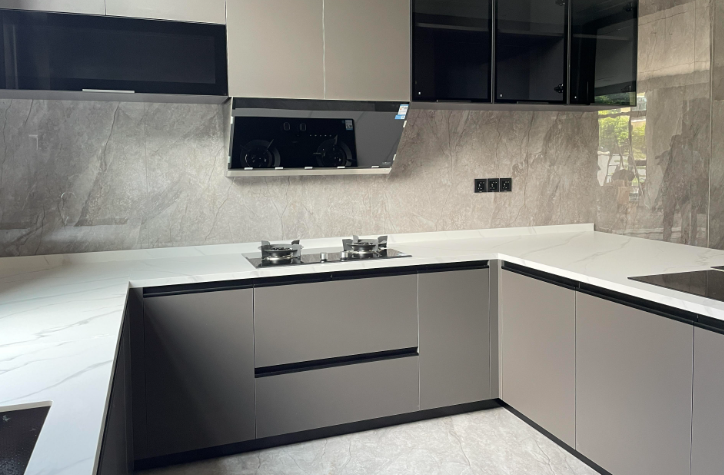
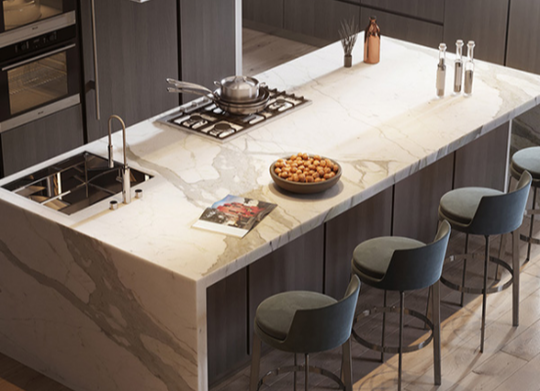
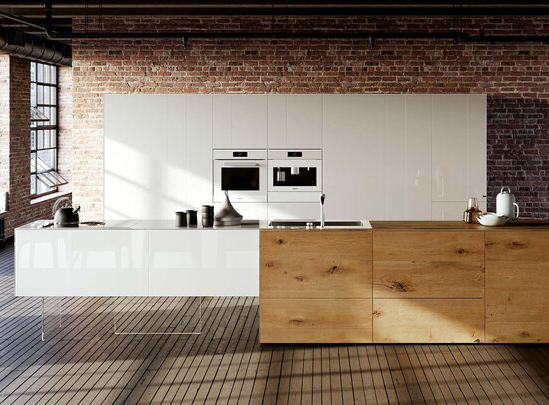
Natural stone is suitable for projects that pursue a natural, unique, and high-end texture, such as high-end villas, luxury hotels, and cultural relic restoration projects. The natural texture and color of natural stone are unique and irreplaceable, which can show the noble and elegant taste of the project. However, due to its poor performance stability and high maintenance cost, natural stone is not suitable for high-traffic commercial spaces (such as shopping malls, office buildings, airports) and ordinary residential spaces that require durability and easy maintenance. Engineered quartz slabs, with their excellent performance and rich customization capabilities, are more suitable for most commercial and residential projects. They can not only simulate the natural texture and color of natural stone, achieving the same decorative effect as natural stone, but also retain the advantages of stable performance, easy maintenance, and reasonable price. Zaozhuang Xingshi’s engineered quartz slabs can be customized according to the color, texture, and size of natural stone, which can meet the decorative needs of different projects while solving the problems of poor stability and high maintenance cost of natural stone, bringing more value to global buyers.